Conventional film application
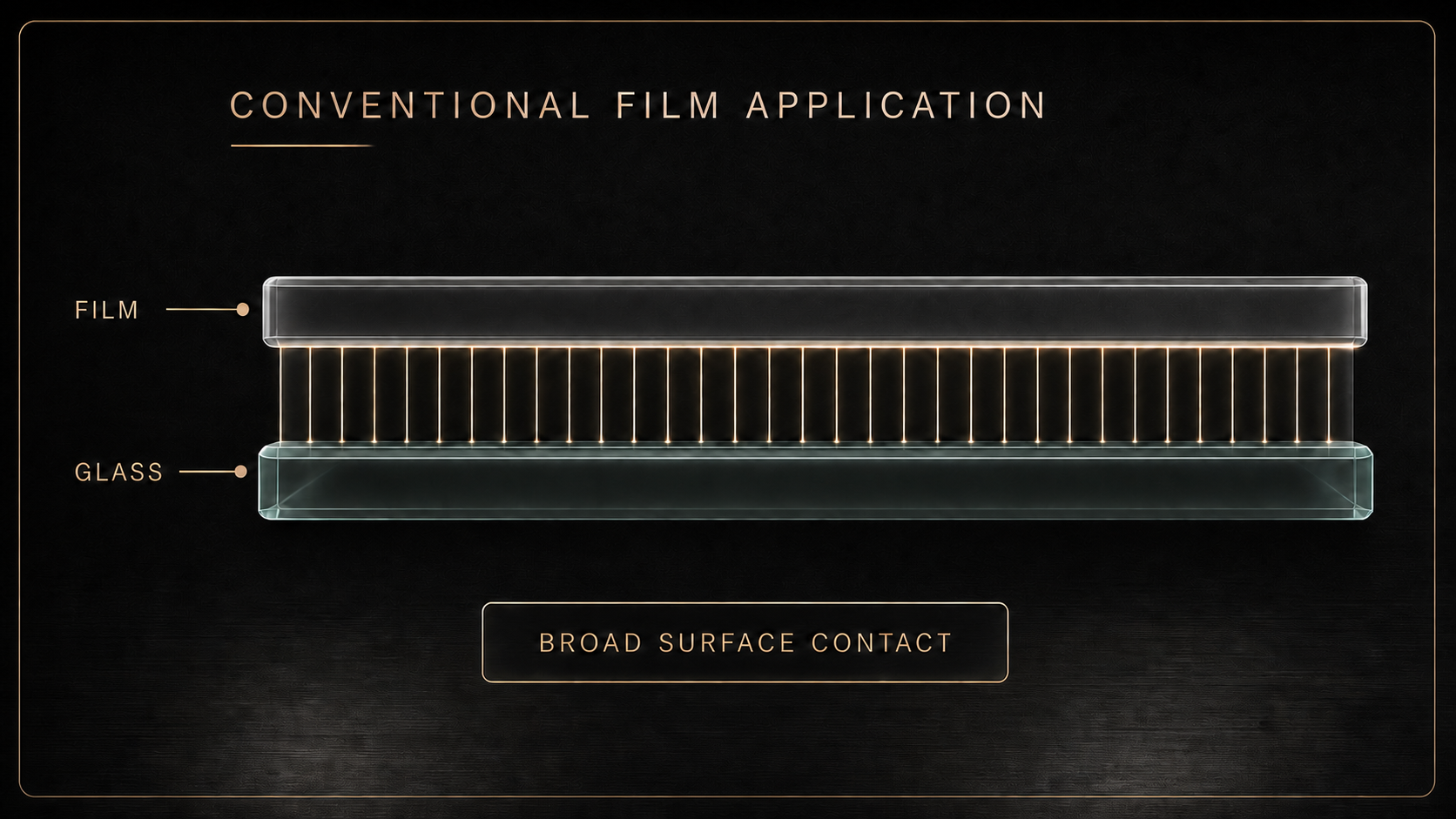
Broad surface bonding can make the film respond directly to the windscreen beneath it.
 Register your interest
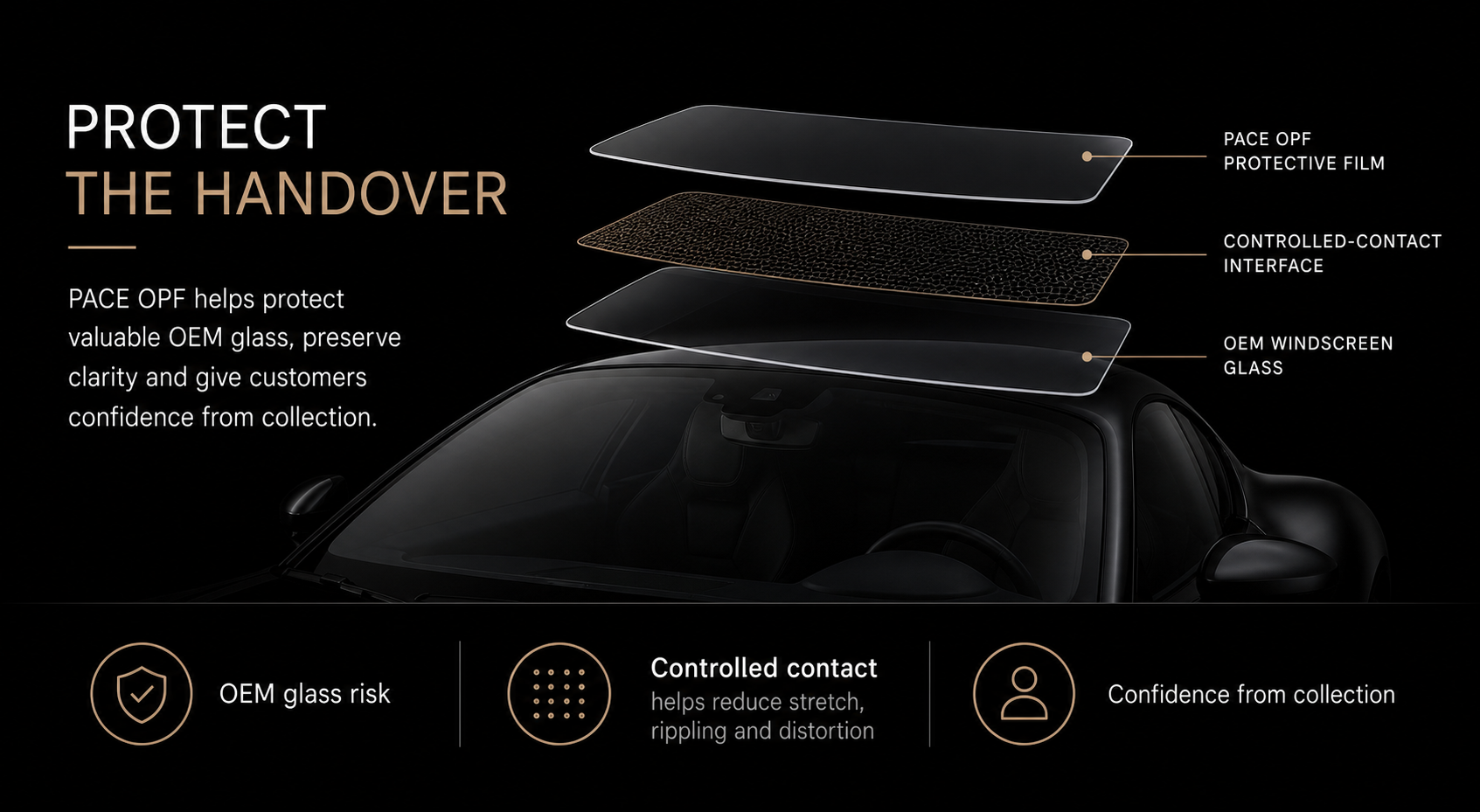
PACE OPF combines controlled surface contact with a thinner multi-layer composite film: a layered optical protection system designed for automotive glass, not adapted from paint protection film.
Controlled contact
Conventional windscreen film can create a rigid bond across the full glass surface. Repeated expansion and contraction may then stress the film over time, which can show as distortion or fit irregularity.
PACE OPF uses a non-permanent preparation layer over the glass surface before the composite polymer film is applied. This reduces direct contact area and helps the glass and film move independently through temperature cycles.
Broad surface bonding can make the film respond directly to the windscreen beneath it.
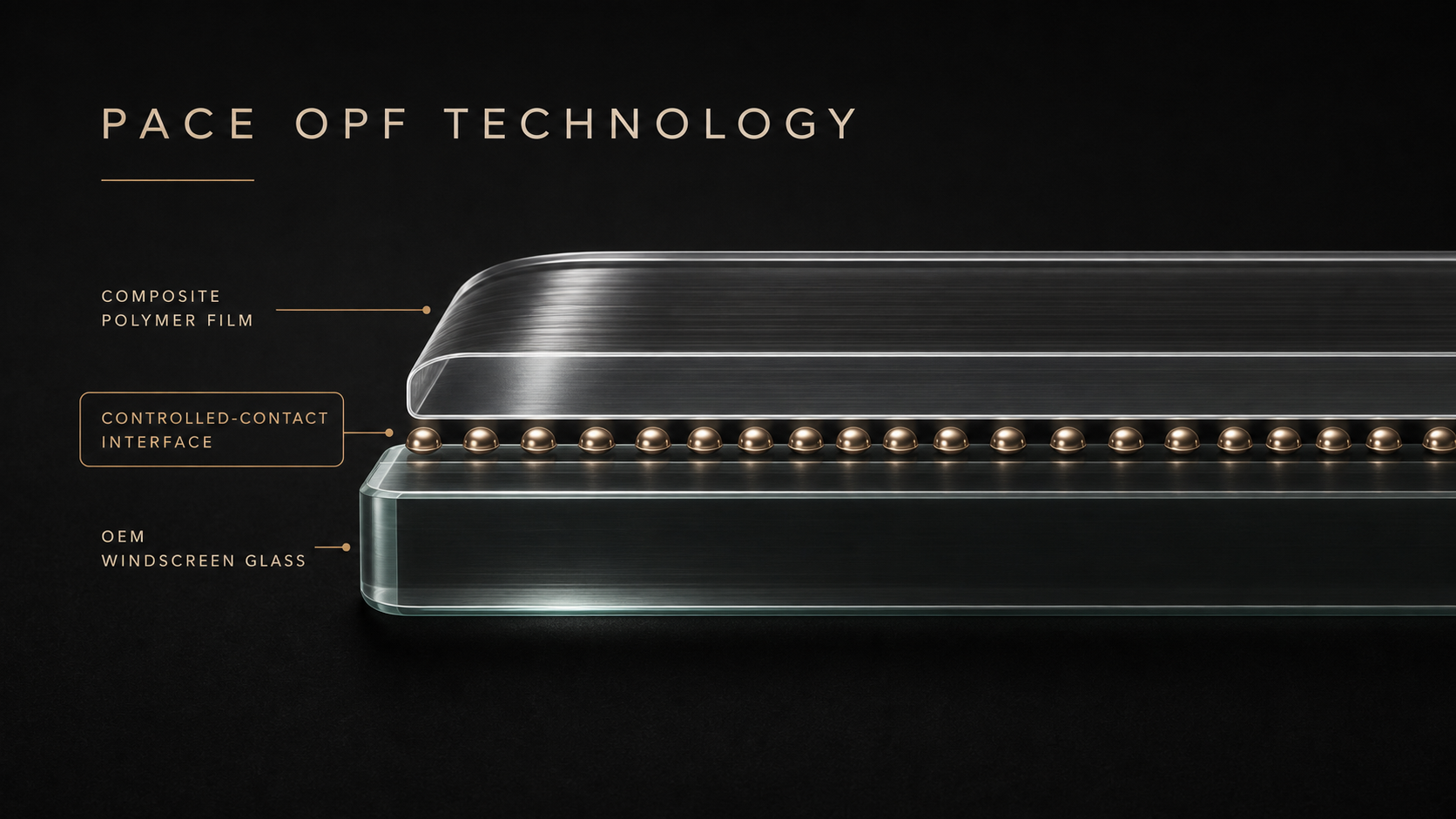
The prepared interface helps reduce interfacial friction while preserving the protective OPF layer above the glass.
Key benefits
The treated interface is designed to help the OPF film and windscreen glass move through hot and cold cycles without forcing the film to behave like a fully bonded skin.
Vehicle-specific sizing means each kit arrives pre-cut for the glass, helping speed up fitting, reduce on-glass trimming and lower the risk of contamination that can compromise optical clarity.
The system is reviewed for optical clarity, glass condition, curvature and sensor layout before fitting, so suitability is confirmed before installation.
Composite construction
A composite is a sandwich of different layers, built up layer by layer so they behave as one material. In PACE OPF, those layers work together to provide protection, optical clarity, clean removal and long-term stability.
PACE OPF is engineered to be around 40% thinner than commonly applied vehicle protection films while maintaining protection and optical clarity for glass in the driver's line of sight.
Installation system
PACE OPF helps reduce the likelihood and severity of minor chips, pitting and everyday road-debris damage, but no film can prevent every impact, crack or glass failure. Road legality, visible-light transmission and ADAS suitability must be assessed for the specific vehicle and jurisdiction before installation.